The flexible workspace market has come a long way from its WeWork-era growing pains.
Today, a new generation of operators is redefining what it means to offer premium, flexible office space – and developers are waking up to the opportunity that partnering with them represents.
There is no better illustration of this evolution than the deal that brought luxury members’ house Maslow’s to The Kensington Building, the first new headquarters office development in Kensington in over 35 years.
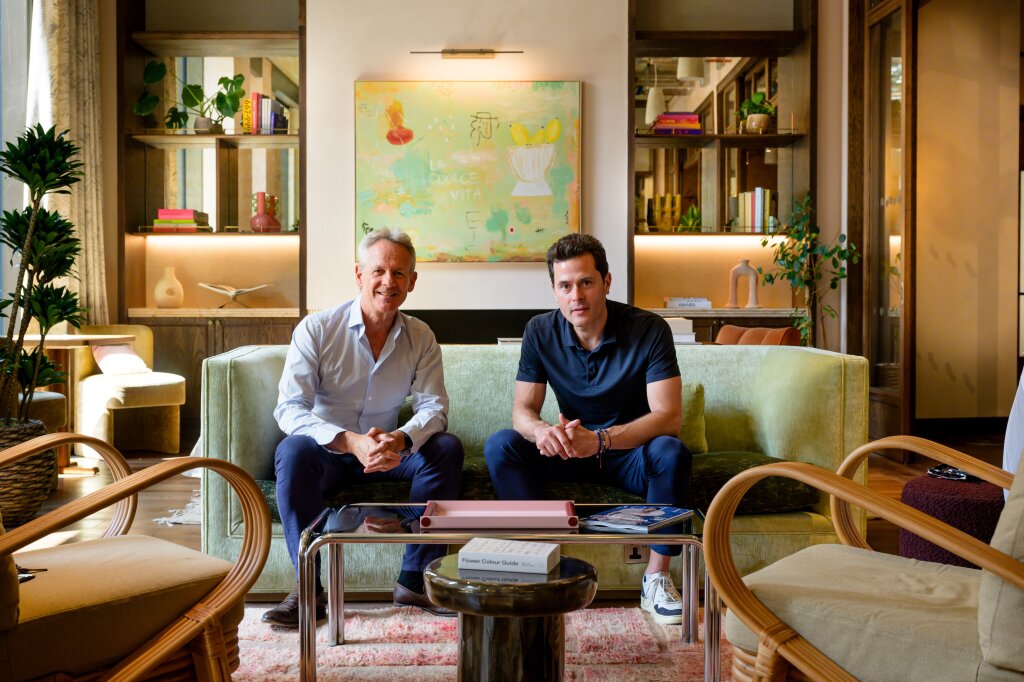
Green Street News sat down with Peter Ferrari, chief executive of Ashby Capital, and Guy Ivesha, founder and chief executive of Maslow’s, to discuss the surging demand for high-quality flexible workspace, why the tired landlord-tenant dynamic is giving way to something more collaborative, and what it takes to build offices that occupiers don’t just need – but actually want to be in.
What’s driving demand for membership-led workspace over conventional serviced offices?
Guy Ivesha (GI): Working patterns have become more fluid and people increasingly want workplaces that fit around their wider lives rather than existing separately from them.
We’ve always believed that work and wellbeing shouldn’t be seen as separate. People want to be able to work effectively, but that work might not always take place at a desk. They also want to live healthy and balanced lives with minimal friction.
Just as successful hotels sell a lifestyle and experience rather than a bed, here we’re selling much more than a desk. We’re creating an environment where people can spend their time well, bringing together productive workspaces with hospitality, wellbeing, culture and community under one roof that suits modern lifestyles.
Kensington is an ideal location for this quality of offer where people want to live, work and socialise.
Is the rise in premium flex space a genuine shift in how companies want to work, or a response to shorter lease appetite and post-pandemic caution about long-term commitments?
Peter Ferrari (PF): Demand for long-term, traditional office space still exists, as evidenced by the fact that the rest of the building has been fully let to long-term tenants post-pandemic.
But London’s a very entrepreneurial place and there’s a huge market of freelancers, start-ups and SMEs who aren’t in the market for large amounts of space. We found we were getting lots of enquiries from people wanting 1,000 sq ft and were having to turn them away.
For that kind of requirement, particularly given rising fit-out costs, a plug-and-play space on a flexible arrangement in a beautifully designed building is a particularly attractive option.
Maslow’s’ space in the Kensington Building
GI: Smaller, growth companies have always sought out more flexible arrangements given their needs may change very quickly. That said, we still ask for a minimum 12-month commitment because we’re building a community rather than creating something transient.
We also live in a world where more people are choosing to work independently as freelancers or consultants, and AI will accelerate this trend, so having an impressive base to meet clients can be hugely beneficial. For businesses, an environment like ours can also play an important role in attracting and retaining staff.
Are you seeing more established corporates alongside family offices and boutique funds, or is demand still concentrated among smaller firms?
GI: It’s a real mix, particularly given the range of spaces we have available here. We have individuals taking house memberships or fixed desks, alongside teams taking private studies that can accommodate between four and 40.
What is particularly interesting is that most of the people making the decision about whether to join tend to live locally.
That’s not been our experience in our West End Houses (1 Warwick in Soho and Mortimer House in Fitzrovia) and reflects Kensington’s appeal as a neighbourhood where people genuinely want to live, work and socialise.
How much of the growth in flexible workspace is coming from landlords proactively building it in, versus operators taking space on the open market?
PF: We’re seeing more landlords explore flexible workspace in different forms, but the right approach depends on the building, location and occupier base. Having some element of flexible workspace is a desirable element for a building, as it provides additional amenities, overflow space and meeting rooms, providing more flexibility for other occupiers in the building.
These two floors weren’t specifically earmarked for flexible workspace, and we had other occupiers who were interested in taking them on a floor-by-floor basis, but we felt a collaboration with Maslow’s was a more attractive proposition for the building as a whole.
What made AshbyCapital choose to bring in an operator like Maslow’s rather than fit out and manage flexible space in-house?
PF: Our specialism is creating great buildings, but we aren’t hospitality experts. We see our role as bringing together all the elements that make a great place to work, and often that’s about partnering with experts.
We’ve seen other landlords set up serviced office businesses but they come at it from the angle of selling an office space rather than a lifestyle. Our nature is to collaborate. What Guy does is unique because it’s hospitality led, rather than office with hospitality tacked on. It’s a partnership and it works.
For us it’s been a really interesting journey. When we launched AshbyCapital 13 years ago we were already seeing a new generation of office building with more amenities and a stronger focus on experience, but since then there’s been a continued evolution in what forward-thinking businesses want.
Some of our first buildings we’re now refitting. For example, at Fitzroy Place, we’ve installed a gym, upgraded the end-of-journey facilities, put in a new reception with a coffee bar, and are currently adding a roof terrace. We like to think we lead the market in terms of delivering the very best places to work and this kind of collaboration with Maslow’s is the next step.
As people continue to focus on experience, the new world of working is going to be a melding of high-quality, amenity-rich buildings with high-end hotel-level service. If you want to create the best of the best, you’ve got to have a philosophy and you’ve got to be prepared to invest.
How early in the design and construction process did AshbyCapital and Maslow’s start working together, and how did that shape the finished building?
PF: The collaboration with Maslow’s didn’t happen until after the building was finished, but we always anticipated that the ground and first floors could function as a building within a building: we designed in a soft spot so a staircase could easily be added, and there was the ability to have a separate entrance off the lobby.
GI: That was what attracted us most. We had been looking in Kensington for some time but never found the right space. We wanted somewhere with a real sense of arrival.
It’s our first location where we don’t have the whole building but the way it has been designed creates a clear identity of its own. When we first viewed the space, we were immediately excited.
We’d never seen a building of this quality, with such impressive ceiling heights, attention to detail and exceptional finishes. All of our buildings are iconic and this is no exception. Historically we’ve worked within heritage buildings where many of the spaces already existed.
Here we had a large blank canvas, which was exciting and challenging because it allowed us to think differently about how people move through the building and experience the space.
PF: It’s been a great collaboration and one that we would certainly do again if the circumstances were right. We both have a similar ethos and approach: we’re not volume businesses and we’re both focused on doing a handful of really well-thought-out buildings in exceptional locations.
GI: That’s really important. With many developers you sense that there’ll be a conflict at some point but we were always on the same page with Ashby.
Does bringing in a brand like Maslow’s change how you think about valuing or exiting an asset like The Kensington Building?
PF: Real estate is a long-term game but too many people are trying to make short-term gains. We’ve been through lots of cycles and when we set up Ashby it was to do something long term.
While most developers are working on an IRR model, our focus is long-term income growth and capital preservation. We tend to hold buildings and that influences our approach: we look to create the very best spaces rather than minimising costs to make the highest short-term returns.
Having Maslow’s in the building adds value: it activates the reception and ground floor space to some degree and, although the rest of the building is currently fully leased, the amenities and services it brings, including a high-end gym, studio and café, will be a selling point in retaining and attracting future tenants.
It broadens the range of occupiers the building can accommodate and it makes the whole building more flexible: an occupier elsewhere in the building that grows and might otherwise need to move to a bigger space could choose to remove a meeting room in their own space to fit in more desks and use meeting rooms in Maslow’s for example.
How much of what Maslow’s offers – cafe, gym, fitness studio – is about attracting members in the first place, versus retaining them once they’ve signed up?
GI: It’s a mix of the two. The amenities help attract members initially and help people understand what makes Maslow’s different, but they’re arguably even more important once someone joins because they become part of their daily routine.
Once someone builds work, fitness, social interaction and meetings into one place, it creates a much stronger connection to the space. That’s what creates loyalty. Ultimately, we’re helping people spend their time well, rather than simply providing somewhere to work. On average, members stay with us for around four years.
Is the line between a members’ house, a boutique hotel and a private members’ club becoming meaningfully blurred, and where do you each think that line should still sit?
GI: Traditional private members’ clubs aren’t designed for work and often have rules that stop people using phones or laptops; they’re spaces for socialising, entertaining and leisure only.
Here the emphasis is different. We wanted to create somewhere people could genuinely spend the day – working productively, meeting clients, exercising, eating well and connecting with others – without those activities feeling separate.
It has the feel and the amenities of a members’ club but it’s very much designed for work, with the meeting rooms, huddle rooms, phone booths and technology infrastructure that people need to operate efficiently.
The design reflects that. It’s intentionally warm, layered and residential rather than corporate, with natural light, integrated planting and carefully considered materials creating a calmer environment.
We also think about how people move through the space, with different settings designed for focus, collaboration or simply taking a moment to reset. Technology is integrated discreetly, so a meeting room can just as easily become a private dining room in the evening. Ultimately, it’s about creating an environment where people can spend their time well.
Kensington hasn’t had a new headquarters office building in 35 years. What does that tell you about occupier appetite in this part of London?
PF: What we saw in the wake of the pandemic was that people wanted more balance. Companies have moved away from the idea that they need to be located in certain clusters and are responding to their employees’ preferences of working in areas with a greater sense of community, which normally comes about by having a mix of offices, residential, retail and leisure. This is also a market where people want quality.
GI: Kensington has a strong sense of place. People don’t simply come here to work; they choose to spend time here. There’s an established culture of independent restaurants, cafes, fitness and wellbeing. We’re providing something here that fits with what local people are looking for.
With occupiers like EssilorLuxottica, Ilex Capital and Netjets already in the building, what does that tenant mix tell you about who’s driving demand for best-in-class space in London?
PF: We’ve always designed offices that target forward-thinking occupiers who recognise that having best-in-class space translates into better business through happier, healthier, more productive and more loyal staff. A lot has already been said about a bifurcation in the London office market, but it’s certainly true that there’s no shortage of interest in the very best space.
How exposed is a strategy like this to a downturn in demand, compared with conventional long-let office investment?
PF: London will always attract entrepreneurs, who will always flex to changing market conditions. One of the reasons we were keen to bring Maslow’s into the building was the volume of enquiries we were getting from smaller occupiers wanting to take space in the building so we’re confident there’s a significant market.
GI: Although we offer flexible terms, we’re quite different from traditional flexible workspace operators because we ask members and companies to make a longer-term commitment.
This gives us greater visibility and helps us build a genuine community rather than a constantly changing customer base. Across our houses, we’ve seen demand stay fairly constant despite economic turbulence.
Looking beyond Kensington, where else in London do you see the same conditions that could support this model?
GI: Our offer isn’t compatible with every building and every location in London. When selecting buildings we look for the best locations where people genuinely want to live, work, eat well, go out and live a healthy life.
Kensington ticked all of those boxes. Elsewhere, areas such as Marylebone, Fitzrovia, and perhaps Bloomsbury share many of those qualities: established neighbourhoods with a strong identity, excellent hospitality, leisure and wellness offerings, and an occupier base that values flexibility and experience.